
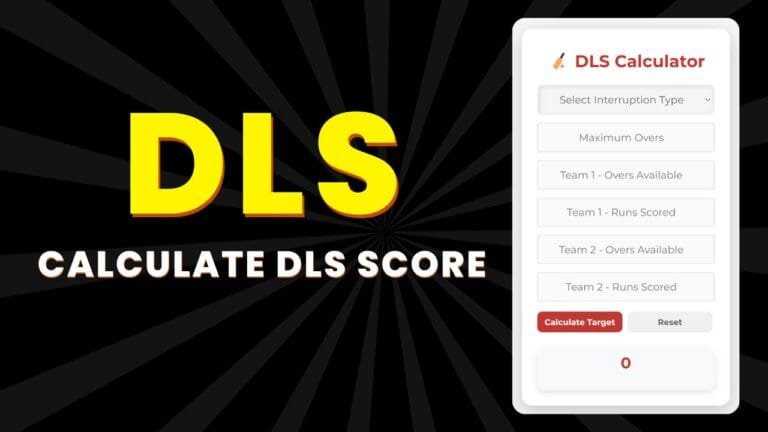
In cricket, an unexpected interruption—such as rain—can severely impact a match. This disruption often leads to one team having fewer overs to chase down the target. To ensure fairness, the Duckworth-Lewis method (also known as the DLS method) is used to calculate the revised target. In this article, we’ll explore how the DLS calculator works, the key terms involved, and how to use it effectively in rain-affected cricket matches.
The DLS Calculator is a tool designed to adjust the target score when a match is interrupted. The DLS method helps in determining a fair target for the chasing team based on the overs lost during interruptions, ensuring that both teams have equal opportunity to win. Whether a match is affected by rain delays or other disruptions, the DLS target calculator provides an accurate calculation of the revised target.
Let’s walk through a practical example of how the DLS calculator is used to determine the revised target.
Team 1 plays 25 overs and scores 120 runs before rain interrupts the game. Team 2, which is supposed to chase down the target, is only given 40 overs to complete the chase.
The calculator will display the revised target for Team 2. If Team 2’s score is higher than the DLS par score, it will be ahead of the target, otherwise, they will be behind.
Understanding the terms used in the DLS method calculator is essential to accurately use the tool. Here’s an overview of the important terms:
Refers to the type of disruption affecting the match. It could be one of the following:
The total number of overs initially scheduled for both teams in the match (e.g., 50 overs per team).
The number of overs Team 1 managed to play before the interruption. This is crucial for calculating the DLS revised target.
The number of runs scored by Team 1 before the interruption. This score will be used to determine the target for Team 2.
The revised number of overs Team 2 is given to chase down the target after the interruption (e.g., 40 overs instead of 50).
The number of wickets Team 2 has lost by the time of the interruption. This factor helps in calculating the loss of resources available to Team 2.
The number of overs remaining when the interruption occurred for Team 1. This information is essential to calculate the total resources lost.
The overs left for Team 2 to chase the revised target after the match resumes.
The expected score Team 1 would have achieved had they completed their full 50 overs. This helps to provide an expected baseline score when interruptions happen early in the innings.

Download the XL11 Fantasy App & use referral code “FREEPLAY” to get bonus
The DLS target calculator is essential in rain-affected cricket matches or any matches that face interruptions. Without the DLS method, calculating a fair target would be challenging, and the disrupted team might be unfairly penalized. By taking into account both the number of overs and wickets, the DLS calculation formula ensures that the chasing team has an equal chance of winning, despite the disruptions.
The revised target formula used in the DLS system makes sure that the match remains competitive, regardless of external factors like weather. By using the DLS calculator, you can quickly compute the correct target score and continue to enjoy the game.
The DLS Calculator is an indispensable tool for ensuring fair play in cricket match interruption scenarios, particularly in rain-affected games. Whether you’re a fan, commentator, or official, understanding how to use the DLS method and its associated terms can significantly enhance your experience of interrupted cricket matches. The DLS revised target calculation helps maintain the integrity of the match, providing both teams with a fair and equal chance of victory.